Triphala Powder vs Tablets vs Juice: Which Format Works Best for You?
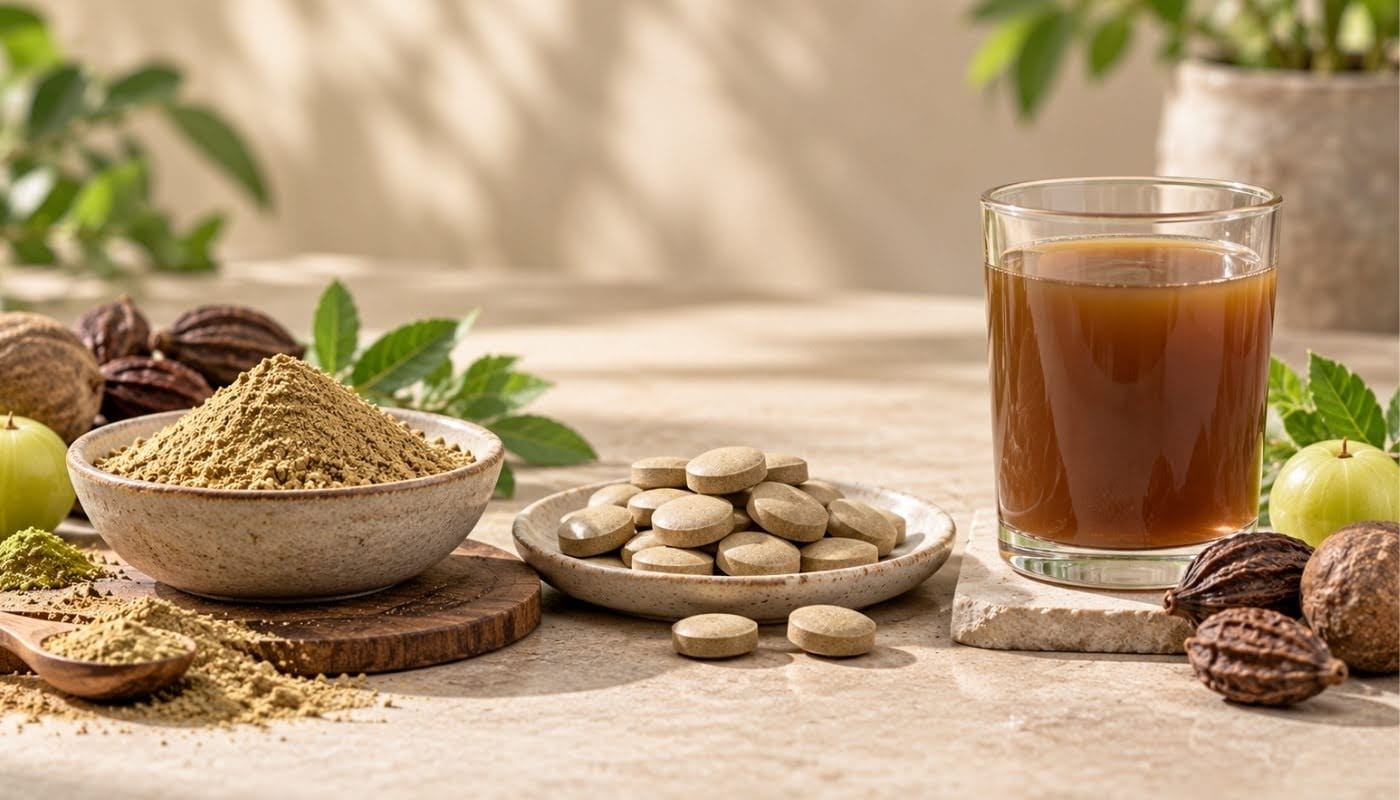
Triphala is one of the most widely used formulations in Ayurveda, yet most buyers face an overlooked decision before they even start: powder, tablet, or juice? Each format delivers the same three fruits (amla, haritaki, and bibhitaki) but differs in absorption speed, taste experience, dosing precision, and daily convenience. A comprehensive review of triphala's pharmacology found that its bioactive polyphenols, including gallic acid, chebulagic acid, and chebulinic acid, are responsible for its antioxidant, anti-inflammatory, and gut-regulating properties (Peterson et al., 2017). Choosing the right format is not about which one is "better" overall but about which one you will actually use every day. Here is a practical comparison to help you decide.
What Is Triphala and Why Format Matters
Triphala translates to "three fruits" in Sanskrit. The formulation combines equal parts of amla (Emblica officinalis), haritaki (Terminalia chebula), and bibhitaki (Terminalia bellirica). Each fruit contributes a distinct pharmacological profile: amla provides concentrated vitamin C and antioxidant polyphenols, haritaki supports bowel regularity and gentle detoxification, and bibhitaki acts on mucous membranes and respiratory health.
Ayurvedic practitioners classify triphala as a tridoshic rasayana, meaning it balances all three doshas (vata, pitta, kapha) and is safe for long-term use. Classical texts prescribe it for digestive regulation, seasonal detoxification, and metabolic support.
Format matters because the same active compounds behave differently depending on how they are processed and delivered. Powder retains the full plant matrix but requires preparation. Tablets compress the material into a convenient dose but may slow dissolution. Juice extracts water-soluble compounds into a ready-to-drink liquid with faster gut absorption. Understanding these trade-offs is essential before committing to a daily digestive routine.
Powder: Traditional Use, Taste, and Dosing Precision
Triphala churna (powder) is the oldest and most traditional format. Ayurvedic practitioners have prescribed churna for centuries because it preserves the full spectrum of plant compounds, including fibre, tannins, and polyphenols, in their natural matrix.
The standard dose is half a teaspoon to one teaspoon (roughly 2 to 5 grams) mixed into warm water, taken on an empty stomach at bedtime or early morning. Some practitioners recommend mixing it with honey or ghee depending on the dosha being addressed.
Powder offers the most precise dosing flexibility. You can adjust the quantity in small increments based on your body's response, which is harder to do with pre-dosed tablets. Powder also allows traditional preparations like kadha (decoction) or paste applications that tablets and juice cannot replicate.
The main drawback is taste. Triphala churna is intensely bitter and astringent, and many users find it difficult to sustain daily use purely because of palatability. Preparation time is another factor: measuring, mixing, and cleaning add steps that tablets and juice eliminate entirely. Shelf stability is good in airtight containers away from moisture, but exposed powder degrades faster than sealed tablets.
Tablets: Convenience and Consistent Dosing
Triphala tablets compress powder into a standardised dose, typically 500 mg to 1,000 mg per tablet. The main advantage is consistency: every tablet delivers the same amount, removing guesswork from the routine. Tablets are also portable, discreet, and require no preparation.
For people who travel frequently or have unpredictable schedules, tablets fit more easily into a daily routine than powder. Swallowing a tablet with water takes seconds, and there is no bitter taste to manage.
The trade-off is absorption speed. A tablet must first dissolve in the stomach before its contents become available for absorption in the gut. Dissolution depends on tablet hardness, binding agents, and individual digestive strength. Some tablets use fillers, binders, or coatings that further slow this process.
Tablets also lock you into fixed increments. If one 500 mg tablet is too little and two is too much, you cannot easily split most triphala tablets the way you can adjust a powder dose. When comparing formats for digestive support, absorption timing often determines whether a user notices the effects within the expected window.
Juice: Faster Absorption and Daily Ease
Triphala juice delivers water-soluble active compounds (gallic acid, ellagic acid, vitamin C, and other polyphenols) in a pre-extracted liquid form. Because extraction happens during manufacturing, the gut does not need to break down plant fibre or dissolve a tablet before absorption begins.
A Phase I clinical trial in 20 healthy volunteers found that Triphala aqueous extract at 2,500 mg daily for four weeks produced no serious adverse effects, with exploratory findings showing improved HDL cholesterol and reduced fasting blood sugar by day 35 (Phetkate et al., 2020). The study used a water-based extract format, reinforcing that liquid delivery of triphala's active compounds is both safe and effective.
Juice is the most convenient daily format. A single measured serving (typically 30 ml diluted in water) takes less than a minute, requires no preparation beyond a cap, and bypasses the bitter taste that makes powder difficult for many users. Refrigeration after opening is standard.
The limitation is that juice does not retain insoluble fibre present in whole powder. For users seeking fibre-based bowel bulking, powder delivers that component where juice does not. Juice is also less portable than tablets for travel. However, for daily home use focused on absorption and compliance, juice outperforms both alternatives for most routines.
Which Format Fits Your Routine
The best format depends on three factors: your daily schedule, your sensitivity to taste, and what you want triphala to do.
Choose powder if you value traditional preparation, want maximum dosing flexibility, and do not mind the bitter taste. Powder suits practitioners and experienced Ayurveda users who already have a morning or bedtime ritual built around churna.
Choose tablets if portability and zero-preparation convenience are your priority. Tablets work well for travellers, office routines, and anyone who finds the taste of triphala prohibitive. Accept that absorption may be slower than liquid formats.
Choose juice if you want the fastest absorption, the easiest daily habit, and a format manufactured under standardised extraction conditions. Juice suits first-time triphala users and anyone prioritising digestive regularity without the complexity of powder preparation. Look for products from GMP-certified, USFDA-approved facilities with no added sugar and transparent ingredient sourcing.
Regardless of format, consistency matters more than any single variable. Ayurvedic practitioners recommend a minimum of four to six weeks of daily use before triphala's cumulative effects on digestion and detoxification become noticeable. For a deeper look at the full range of triphala benefits, the ingredient guide covers what long-term use supports.
Conclusion
Powder, tablets, and juice each deliver triphala's three-fruit formulation differently, and the right choice depends on your schedule, taste tolerance, and absorption priorities. For daily digestive support with fast absorption and minimal preparation, juice offers the most practical path to consistent long-term use.
Try Kapiva Triphala Juice for daily digestive support and build a routine that stays sustainable beyond the first week.
Frequently Asked Questions
Powder offers more dosing flexibility and retains insoluble fibre, while tablets provide consistent pre-measured doses with no bitter taste. Choose based on whether you prioritise dosing control or convenience.
Take it on an empty stomach at bedtime or early morning for optimal absorption. All three formats work best when taken at the same time daily.
Yes, juice delivers pre-extracted water-soluble compounds that absorb immediately in the gut, while powder must first dissolve and break down before active compounds become bioavailable.
Yes, the active compounds are the same across all formats, so switching does not reset your progress. Maintain the same daily dosage when switching.
Most practitioners recommend at least four to six weeks of uninterrupted daily use before digestive benefits become clearly noticeable. Those on blood-thinning medication should consult a practitioner first.
Kapiva currently offers triphala only as a juice product, manufactured in GMP-certified, USFDA-approved facilities with no added sugar.