Giloy Benefits for Immunity: The Complete Guide
Giloy is one of the most referenced herbs in Ayurveda, yet most online guides reduce it to a bullet-point list of vague health claims. The herb deserves better. Known botanically as Tinospora cordifolia and traditionally as guduchi, giloy has a documented history spanning thousands of years of Ayurvedic practice and a growing body of pharmacological research. A comprehensive review identified over 80 active compounds in Tinospora cordifolia, including alkaloids, glycosides, and polysaccharides, all contributing to its broad therapeutic profile (Saha & Ghosh, 2012). Here is a depth-first guide covering what giloy actually does for immunity, how it works, the best ways to use it, and why the giloy-tulsi pairing has become an Ayurvedic staple.
What Is Giloy (Guduchi) and Why It's Used in Ayurveda
Giloy is a climbing shrub native to tropical regions of India, Myanmar, and Sri Lanka. In Sanskrit, it is called "Amrita," which translates to "the root of immortality," a name that reflects how central the herb has been to Ayurvedic medicine for centuries. Classical Ayurvedic texts such as the Charaka Samhita classify giloy as a rasayana, a rejuvenating herb intended for long-term use to promote vitality and longevity.
The stem is the most pharmacologically active part of the plant. Giloy stems grown on neem trees are considered especially potent in traditional practice because the host tree's bioactive compounds are believed to enrich the vine. The stem contains tinosporin, berberine, palmatine, and immunomodulatory polysaccharides that form the basis of giloy's reputation as an immune-supporting herb.
Ayurvedic practitioners prescribe giloy across all three doshas, making it one of the few herbs considered tridoshic. Its bitter and astringent taste balances pitta and kapha, while its warming post-digestive effect prevents vata aggravation.
Core Benefits for Immunity and Daily Wellness
Giloy's primary claim in modern wellness is its ability to support the immune system. Giloy polysaccharides activate macrophages, the white blood cells responsible for identifying and engulfing pathogens. Preclinical studies have also shown that giloy extracts modulate cytokine production, supporting a balanced immune response rather than overstimulating it.
A randomised, double-blind clinical trial evaluated Tinospora cordifolia extract in 75 patients with allergic rhinitis over eight weeks. The treatment group showed significant improvement in symptoms including sneezing, nasal discharge, and nasal obstruction compared to placebo, with a corresponding rise in neutrophil and eosinophil counts indicating enhanced immune activity (Badar et al., 2005).
Beyond immunity, giloy supports daily wellness in several measurable ways. The herb promotes healthy antioxidant activity, helping neutralise free radicals that accelerate cellular ageing. Preclinical evidence indicates giloy may support healthy blood sugar levels by promoting glucose metabolism, though human clinical data in this area remains limited. Giloy also supports liver function and promotes healthy digestion, both of which contribute to overall vitality. For those building a broader immunity support routine, giloy pairs well with other Ayurvedic staples.
How Giloy Is Traditionally Used
Ayurveda prescribes giloy in several forms depending on the condition and the practitioner's approach.
Giloy Juice (Svarasa)
Fresh giloy stem is crushed, and the juice is extracted. Giloy juice is the most common modern format and delivers the herb's water-soluble polysaccharides and alkaloids in a concentrated liquid form.
Giloy Powder (Churna)
Dried giloy stem is ground into a fine powder. The powder can be mixed into warm water, milk, or honey. Churna is the traditional format for longer-term daily supplementation.
Giloy Satva
A starch extract prepared by soaking crushed stems in water and collecting the sediment. Satva is considered the most refined traditional preparation and is used in classical Ayurvedic formulations for fevers and general debility.
Giloy Kadha (Decoction)
Giloy stems are boiled with water, black pepper, and tulsi leaves to create a warm drink. Kadha is the go-to home remedy during seasonal changes across Indian households. For a deeper look at the properties of giloy, the ingredient page covers sourcing and composition details.
Giloy and Tulsi Together: Why This Pairing Works
Combining giloy with tulsi (holy basil) is not a modern marketing invention. Ayurvedic practitioners have paired these two herbs for centuries because their mechanisms complement each other rather than overlap.
Giloy works primarily through immunomodulation. Its polysaccharides activate macrophages and support balanced cytokine production, strengthening the body's first line of defence. Tulsi, on the other hand, brings strong antimicrobial and adaptogenic properties to the pairing. Tulsi's eugenol, rosmarinic acid, and ursolic acid have demonstrated antimicrobial activity in preclinical settings, adding a direct pathogen-targeting layer that giloy does not provide on its own.
The result is a two-pronged approach: giloy primes and strengthens immune cells while tulsi provides direct antimicrobial support and helps the body manage stress. Chronic stress suppresses immune function, and tulsi's adaptogenic properties help buffer that effect.
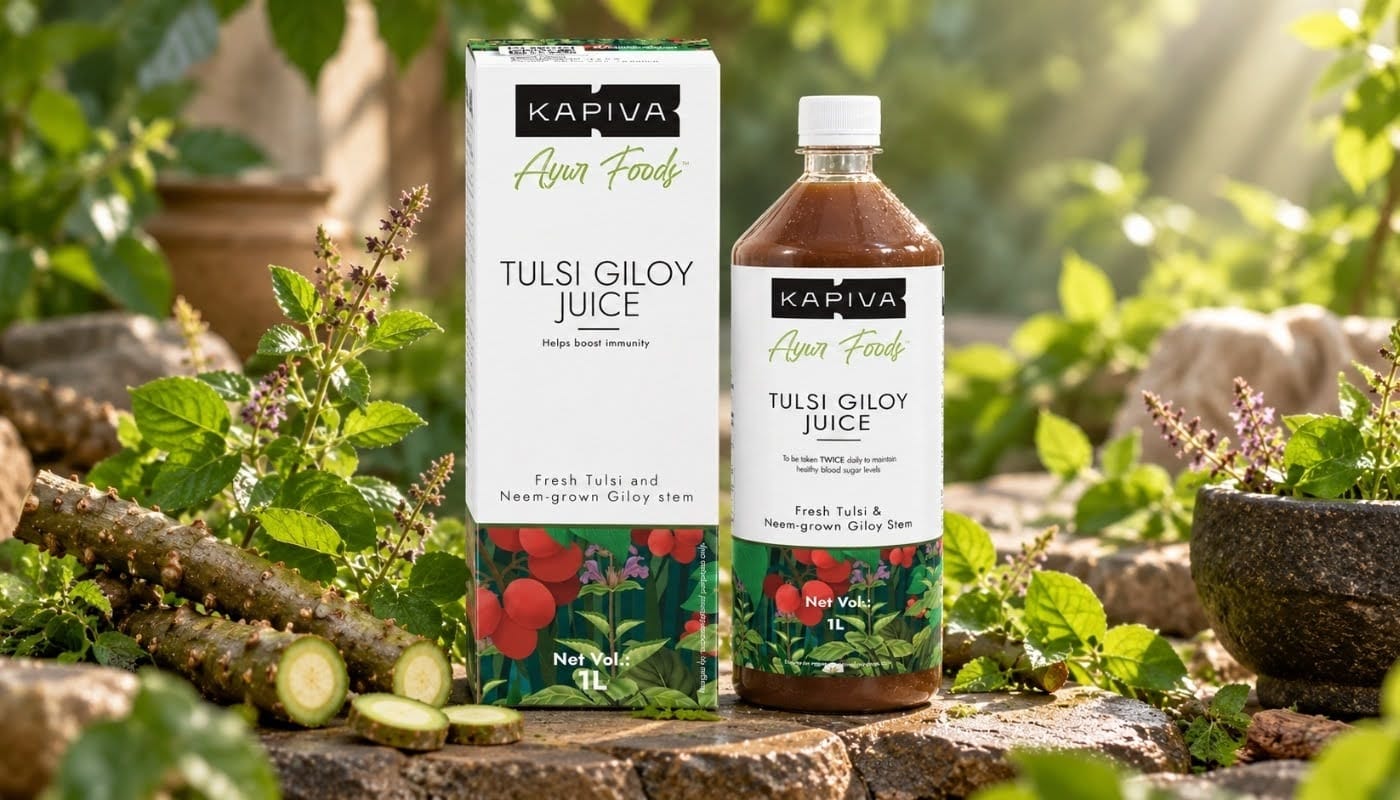
Seasonal use of this pairing is common in Indian households, particularly during monsoon and winter months when respiratory infections rise. A ready-to-use format removes the need for daily kadha preparation. Tulsi-giloy juice combines both herbs in a single daily serving, standardised for consistent potency.
How to Add Giloy to a Daily Routine
Giloy works best when used consistently rather than sporadically. A daily serving of 20 ml to 30 ml of giloy juice, taken on an empty stomach in the morning, is the most common recommendation from Ayurvedic practitioners. Diluting the juice in a glass of water makes it more palatable for first-time users.
For those already using amla as part of their daily wellness routine, giloy and amla juice can be taken on the same day. Amla provides a concentrated dose of natural vitamin C, while giloy works on immune cell activation. The two herbs target different aspects of immune health and do not interfere with each other.
Powder users can add half a teaspoon of giloy churna to warm water or milk once daily. Consistency matters more than format: whether you choose juice, powder, or capsules, a minimum of four to six weeks of daily use is needed before the herb's cumulative effects become noticeable.
Avoid taking giloy if you are on immunosuppressive medication, as the herb's immune-activating properties may counteract the medication's intended effect. Pregnant and lactating women should consult a healthcare practitioner before starting giloy supplementation. People with scheduled surgery should stop giloy use at least two weeks before the procedure, as the herb may influence blood sugar levels during anaesthesia.
Conclusion
Giloy's position as one of Ayurveda's most valued immunity herbs is backed by centuries of traditional use and growing pharmacological evidence. Pairing giloy with tulsi adds antimicrobial and adaptogenic benefits the herb does not provide on its own, creating a more complete approach to seasonal and everyday immune health.
Try Kapiva Tulsi-Giloy Juice for daily immunity support and build a consistent, research-informed wellness routine.
Frequently Asked Questions
Giloy supports immune cell activation, promotes antioxidant activity, and may help maintain normal blood sugar levels. It also supports liver function and healthy digestion.
Yes, giloy juice delivers immunomodulatory polysaccharides and alkaloids that support immune markers like neutrophil activity and balanced cytokine production.
Yes, Ayurveda classifies giloy as a rasayana meant for long-term daily use. People on immunosuppressive medication, pregnant women, and those with scheduled surgery should consult a doctor first.
Giloy is used traditionally for children above five at half the adult dosage, but no large-scale clinical trial exists for paediatric use. Consult a practitioner before giving it to a child.
Morning on an empty stomach is ideal for faster absorption. Consistency matters more than the exact time, so pick a slot that fits your routine.
Yes, giloy pairs well with tulsi, amla, and ashwagandha. Avoid stacking multiple immune-activating herbs without professional guidance.